Prepare a Short Presentation with AI Chat Agent Plus
Turn rough notes into a short presentation outline, revise the wording, and rehearse with cue cards.
Updated Nov 19, 2026
In this article
A five-minute presentation can be difficult to write when you have enough notes for half an hour. AI Chat Agent Plus can help you work through those notes in a conversation, choose a structure, and revise the wording before you rehearse.
The publisher describes the app as a conversational assistant for writing, learning, and creative work. You can use a text conversation to develop a talk one section at a time. AI Chat Agent Plus on the App Store
Alibox promotes this application.
Give the chat a clear speaking brief
Start with the audience, the time available, and the thing you want listeners to understand. Include the facts you already have and identify any gaps. For a presentation about a community garden, that might mean explaining who can join, when volunteers meet, and what a first visit involves.
Try this prompt.
Help me make an outline for a five-minute talk about our community garden. The audience is local residents who have never visited. Use the notes below. Include an opening, three main points, and a closing invitation. Mark missing details as questions for me. Keep the language conversational.
Paste your notes underneath. This gives the assistant enough context to organize the material around the people who will hear it. Guide to clearer AI Chat prompts
Build an AI Chat presentation outline
Read the proposed outline before requesting a full script. Check that each section serves the purpose you gave. If the community garden talk spends too much time on its history, ask for more space for practical information about joining.
You can follow up with a specific revision.
Keep the opening brief. Make the three sections about what volunteers do, what a first visit looks like, and how to join. Use only the facts in my notes, and list any details I still need to confirm.
Choose the structure you can explain comfortably. If two sections repeat the same point, combine them and give the remaining section more room.
Turn one section into spoken language
Ask the assistant to draft a single section first. Read it aloud and notice where you stumble, where a sentence feels too long, or where a phrase sounds unlike you.
A useful follow-up is to name the problem.
Rewrite this section using shorter sentences. Keep the example about planting herbs. Remove the formal greeting and keep the tone friendly.
Once you like the voice, use the same approach for the other sections. Add examples you can describe from your own experience. Those details give you something familiar to speak about when you look up from your notes.
Check details and rehearse with a timer
Confirm dates, names, numbers, and instructions against your own sources. Replace unanswered questions before sharing the draft. An outline generated from incomplete notes may still need details such as the meeting location or contact person.
Read the complete talk aloud with a timer. If you run over, identify the section that took longest and ask for a shorter version while preserving its main point. Rehearse again after editing, since your speaking pace determines how much fits into the time.
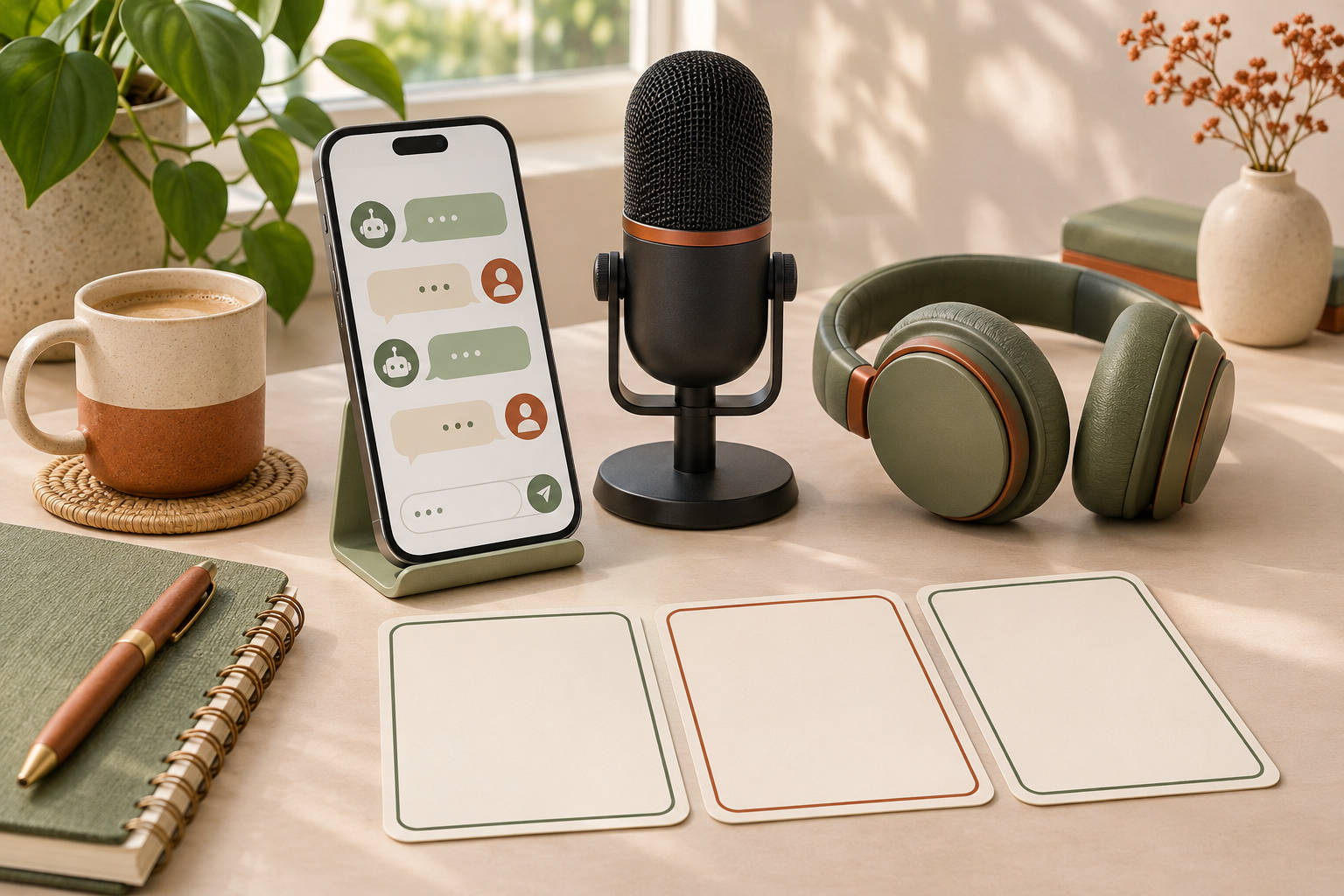
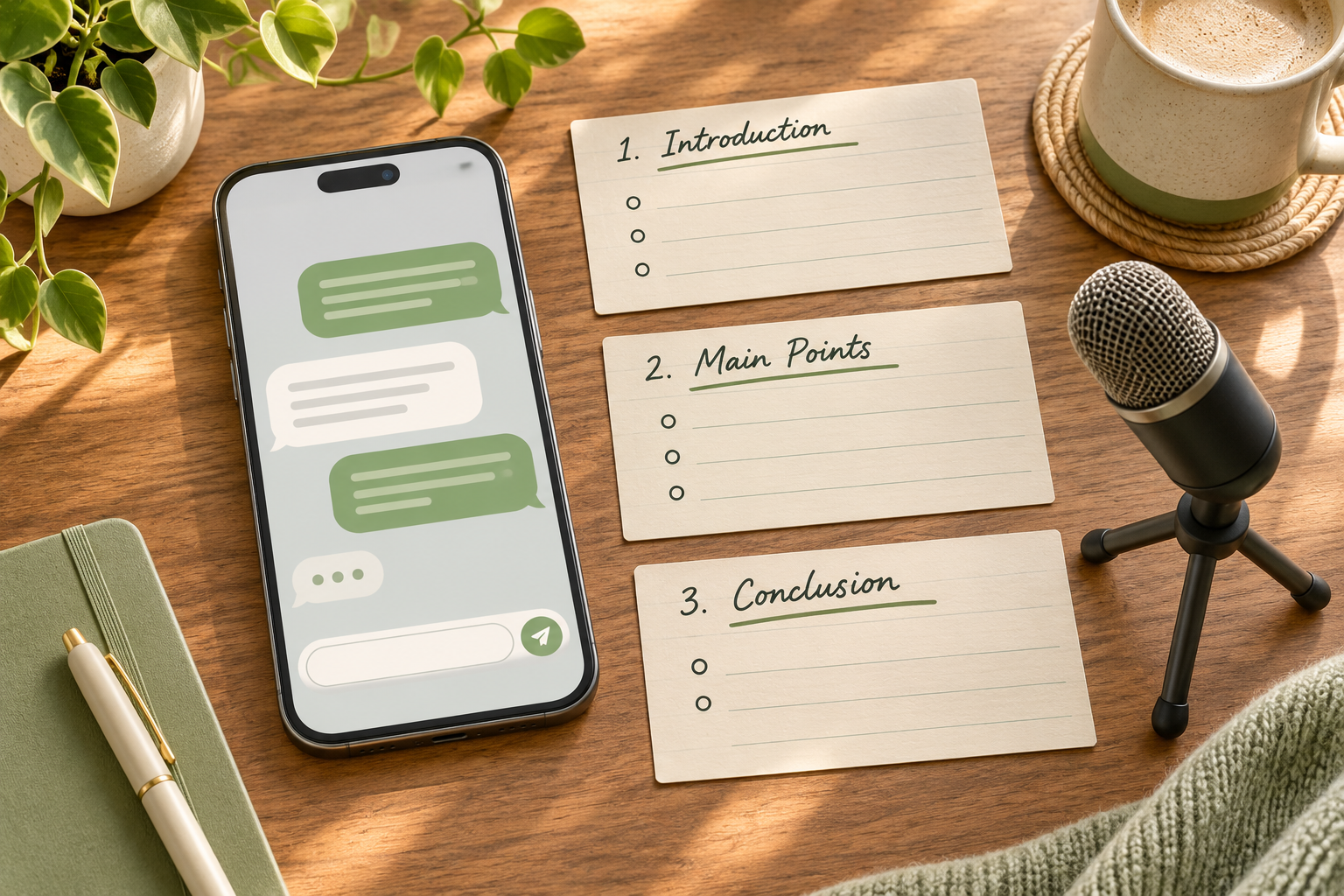
Then turn the script into a few cue cards. Ask for short reminders under each section heading, and check that each card gives you enough to continue without reading every sentence. AI Chat feature overview
Can I prepare audience questions in the same chat?
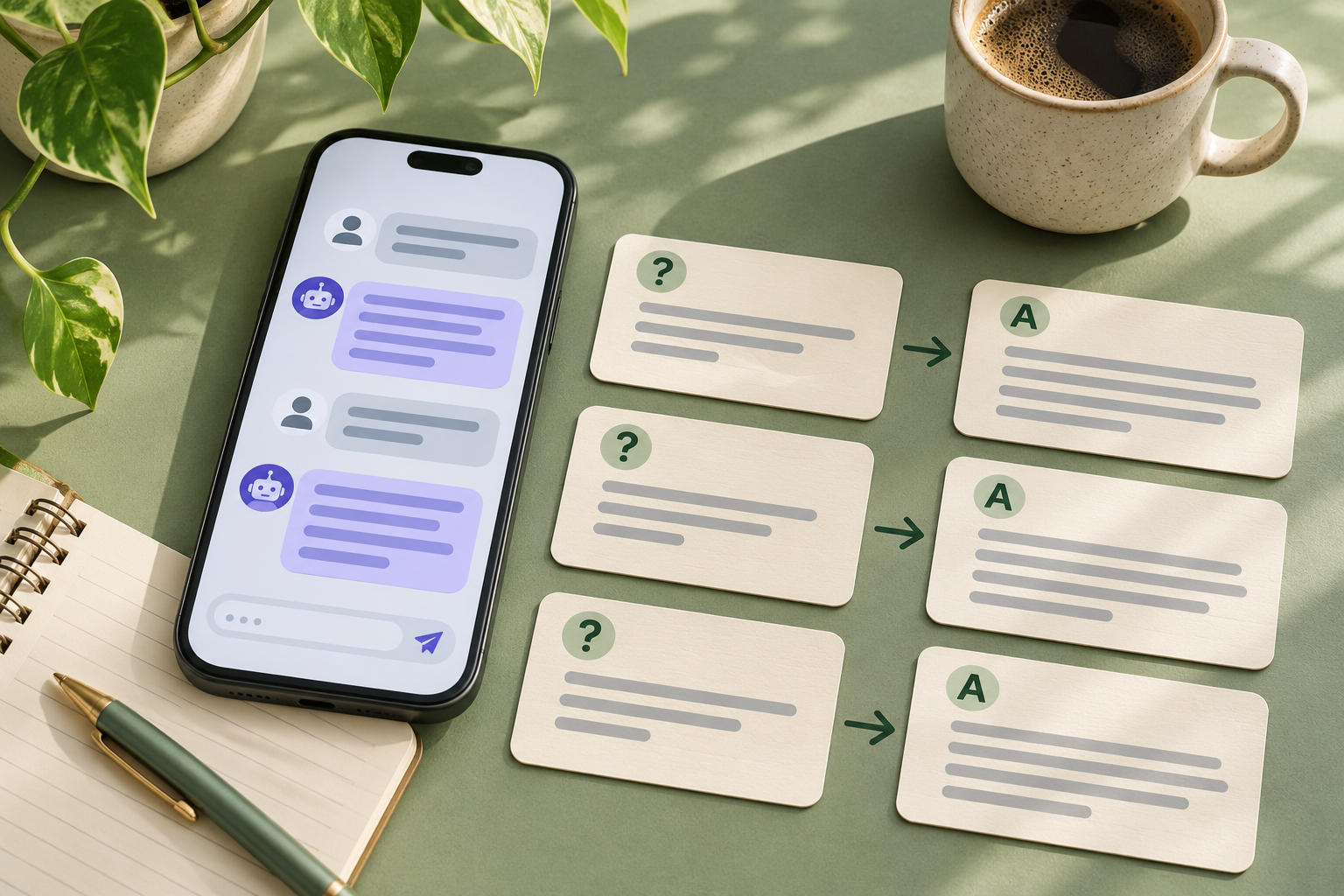
Yes. Ask for questions a newcomer might have after hearing your outline. Review them against what you actually know, and prepare short answers for the questions you expect. Keep unresolved points on a separate list so you can confirm them before the presentation.
What should I do if the draft sounds too formal?
Paste a short passage you wrote in your usual voice and ask for a revision with a similar level of formality. Read the result aloud and replace any expressions you would rarely use. Repeat that check across the talk so the opening and closing sound like the same speaker.