Translate a Souvenir Maker Card on iPhone
Read the story behind a souvenir, preserve maker names, and prepare a useful gift note.
Updated Nov 25, 2026
In this article
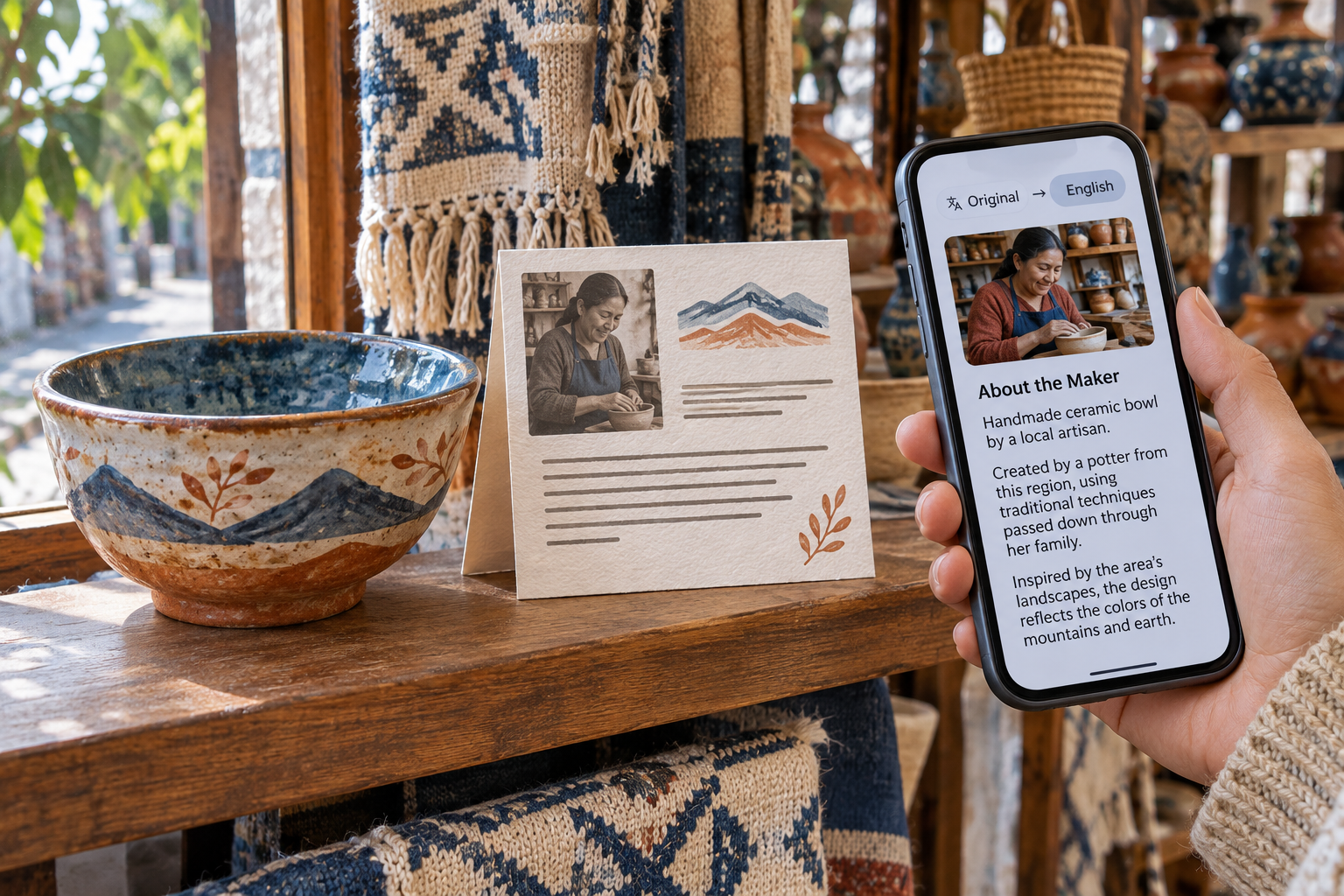
A souvenir often comes with a small card explaining who made it and what inspired the design. Reading that story can make the object more meaningful, especially when you plan to give it to someone at home. A photo translation lets you explore the printed description while keeping the original wording nearby.
Translate Photo Camera & Voice supports recognizing and translating text from photos and uploaded images. You can photograph a maker card, read the translated result, and compare names and details with the original. Translate Photo Camera & Voice on the App Store
Alibox promotes this application.
Find the story attached to the item
Check which card belongs to the object you are viewing. A shelf may hold work by several makers, and a general shop sign can describe the collection as a whole.
Look for the maker's name, workshop location, and the section describing the piece. If several items share a display, ask the shopkeeper which information applies before photographing it. Keep the object's name or reference visible when possible.
Translate a souvenir maker card on iPhone
Place the card in even light with the full paragraph visible. Hold the phone parallel to the surface and check that small lettering is sharp. Move away from reflections on laminated cards.
Open the photo in Translate Photo Camera & Voice and choose the language you want to read. For a folded card, capture each panel separately and keep the reading order clear. Include a full sentence when it refers to a design or tradition mentioned earlier.
Compare the translation with the printed text. If a sentence seems unrelated to the item, inspect the recognized words and try a closer image of the complete paragraph. Photo translation tips for printed text
Preserve maker and place names
Keep the maker's name and workshop name as printed, alongside the translated explanation. Proper names can be useful when looking for the artist again or describing the gift to its recipient.
A card might connect a pattern with a local landscape or explain a decorative motif. Save that description with a photo of the item so you can remember which detail it refers to.
Treat claims about origin or production as information from the seller or maker. Ask the shopkeeper for clarification if those details affect your purchase.
Ask about unclear materials and care
A short story card may leave practical questions unanswered. Check whether separate care instructions come with the item. For pottery, textiles, or woodwork, ask about any unfamiliar wording before deciding how you will use or clean it.
You can prepare one short question at a time when using voice translation. Give the shopkeeper enough context to identify the object and check that you understood the answer. Short voice translation guide
Keep a useful gift note
After choosing the souvenir, make a short note with the original maker name, the translated story, and the shop location. Keep care information separate so the recipient can find it easily.
If a phrase remains uncertain, mark it for checking instead of turning it into a definite claim. You can include a photo of the original card with the gift so the wording stays connected to the object.
For other printed keepsakes from a trip, a clear caption photo can help preserve place names and descriptions. Postcard caption translation guide
What if the card uses decorative lettering?
Try a sharp close-up with the complete phrase visible. Compare the recognized spelling with the original and ask the maker or shopkeeper about words that remain unclear.
Can I translate a card photo later?
The publisher lists uploaded image translation. Keep a clear photo of the entire card and a separate view of the item so you can reconnect the description with the correct souvenir. Translate app feature overview